
On this day in history...
...in 1991, the ERS-1 satellite lifted off from the Guiana Space Centre in Kourou, French Guiana, on July 17, at 03:46 CEST, aboard an Ariane 4 launch vehicle. ERS stood for European Remote Sensing, and the "1" marked it as the first of its kind: the most sophisticated Earth observation spacecraft ever developed in Europe at the time of its launch, and the first ESA mission dedicated specifically to monitoring the environment of our planet from orbit. Weighing more than two tonnes and stretching nearly twelve metres once fully deployed, ERS-1 circled the Earth every 100 minutes at an altitude of 782 kilometres in a Sun-synchronous polar orbit, beaming data to the ground at 105 megabits per second. It had been designed for a three-year mission. It would operate for nearly nine.
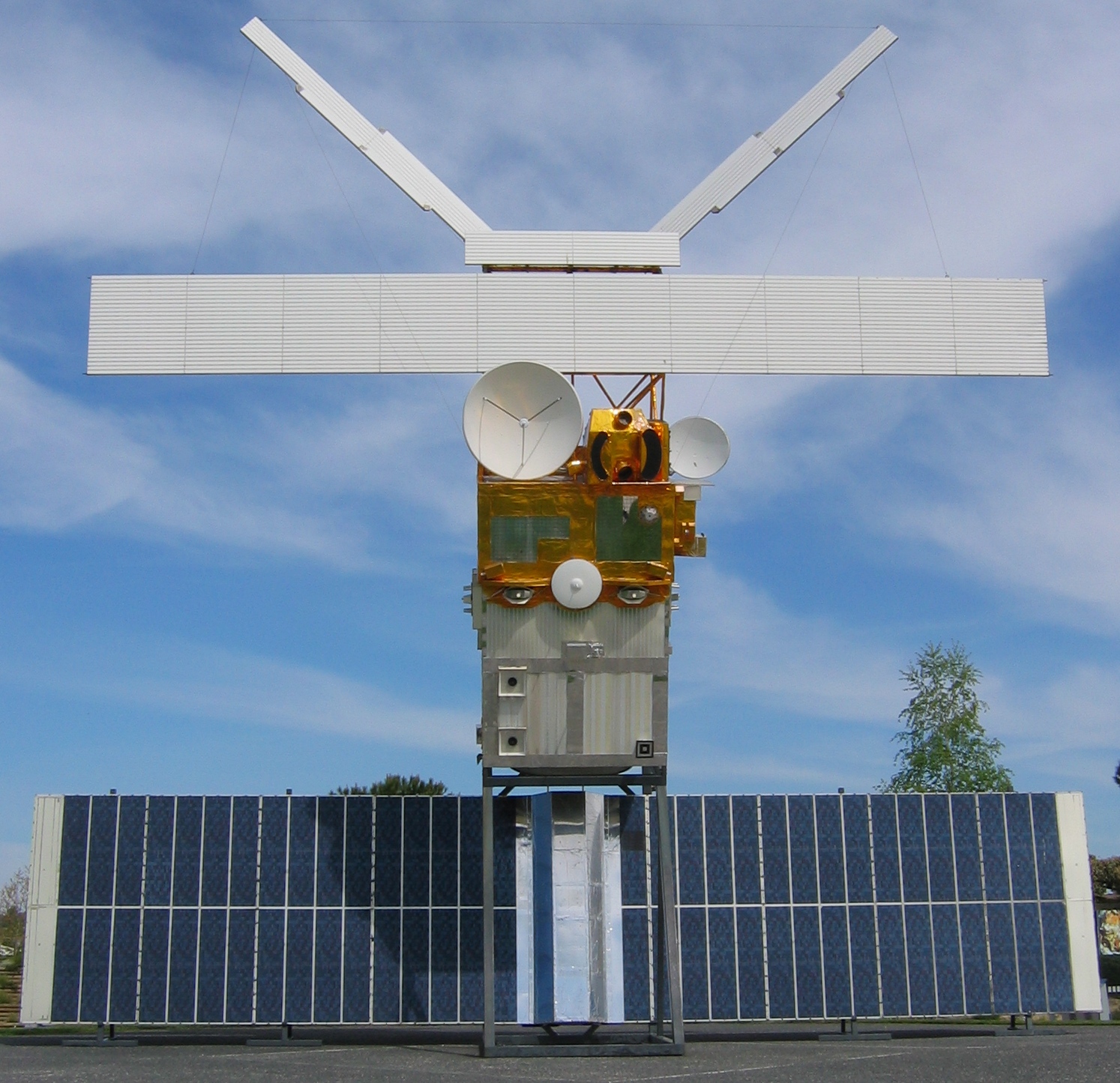
The satellite carried an array of instruments whose combination was unprecedented for a European mission. Its centrepiece was the Active Microwave Instrument (AMI), a large synthetic aperture radar (SAR) system that produced detailed images of the Earth's surface at 30-metre resolution regardless of cloud cover or daylight conditions, generating 4.5 million pixels per second across a 100-kilometre swath. The AMI also operated in scatterometer mode, measuring wind speed and direction over the ocean surface by analysing the roughness patterns in the radar backscatter. The Radar Altimeter (RA) bounced pulses off the ocean and ice surfaces to measure sea surface height, significant wave height, and wind speed at nadir. And the Along-Track Scanning Radiometer (ATSR) measured sea surface temperature with an absolute accuracy better than 0.5 Kelvin at a spatial resolution of one kilometre, using two along-track views of the same target to correct for atmospheric contamination in a way that no previous spaceborne radiometer had achieved. Together, these instruments made ERS-1 the first satellite capable of monitoring the ocean simultaneously in its physical, thermal, and dynamic dimensions from a single platform.
For physical oceanography, the contributions of ERS-1 were both direct and foundational. The ATSR initiated a near-continuous global record of sea surface temperature that has been extended through ATSR-2 on ERS-2 and the Advanced ATSR on Envisat, providing one of the longest satellite-derived SST time series available to climate researchers. The radar altimeter contributed to the emerging global picture of ocean circulation and sea level variability, operating concurrently with TOPEX/Poseidon from 1992 onward and providing complementary coverage at higher latitudes, including the Southern Ocean and the polar seas that the TOPEX/Poseidon orbit, inclined at 66 degrees, could not reach. ERS-1's Sun-synchronous polar orbit at 98.5 degrees of inclination extended altimetric coverage to latitudes beyond 80 degrees, enabling the first systematic radar altimetry of Arctic sea ice and the Antarctic ice sheet, including the production of a digital elevation model of Antarctica that became a standard reference for glaciological studies. The scatterometer provided the first consistent global maps of surface wind fields over the ocean, data that were rapidly assimilated into numerical weather prediction models and that demonstrated operationally what had previously only been demonstrated in concept: that spaceborne microwave remote sensing could contribute in real time to atmospheric and oceanic forecasting.
ERS-1 operated through several distinct orbital phases, each optimised for different scientific objectives. An initial commissioning phase was followed by a 3-day repeat cycle designed for ice and geodetic mapping, then a 35-day exact repeat cycle for oceanography and monitoring, and finally a 168-day geodetic phase in which the dense, non-repeating ground track allowed the construction of the most detailed map of the marine geoid then available, revealing seafloor topography through its gravitational expression on the sea surface with a spatial resolution and coverage that surpassed anything previously achieved. The marine geoid derived from ERS-1 and subsequently from its sister satellite ERS-2 transformed marine geodesy and provided the gravitational reference against which all subsequent altimetric measurements of ocean dynamic topography are calibrated.
When ERS-2 was launched in April 1995, the two satellites briefly shared the same orbital plane in a tandem configuration, with ERS-2 following ERS-1's ground track by exactly one day. That tandem mission allowed direct comparison of SAR images of the same ocean surface under nearly identical conditions but separated by 24 hours, enabling the measurement of surface current velocities through the displacement of ocean features and opening a new methodological avenue in satellite oceanography. ERS-1 ended its mission on 10 March 2000, after a failure in the on-board attitude and orbit control system. In its nine years of operation it had completed 45,000 orbits and acquired more than 1.5 million individual SAR scenes.
The contributions of ERS-1 to oceanography and Earth observation can be summarised across several areas:
- First European ocean-observing satellite: ERS-1 established Europe as an independent capability in satellite Earth observation, demonstrating that ESA could design, build, and operate a multi-instrument platform capable of monitoring the ocean, atmosphere, land surface, and cryosphere simultaneously from a single spacecraft.
- ATSR sea surface temperature record: The Along-Track Scanning Radiometer initiated a global SST time series of unprecedented accuracy that, continued through subsequent ATSR instruments, now spans more than three decades and constitutes one of the primary satellite datasets for studying ocean heat content, climate variability, and the long-term warming of the ocean surface.
- Polar and high-latitude altimetry: ERS-1's polar orbit extended radar altimetry to the Arctic and Antarctic for the first time, enabling the measurement of sea ice extent and thickness, the mapping of ice sheet topography, and the monitoring of sea level variability in regions inaccessible to the TOPEX/Poseidon mission.
- Marine geoid and seafloor mapping: The geodetic phases of ERS-1 produced the densest global coverage of sea surface height measurements then available, enabling the construction of a high-resolution marine geoid that revolutionised knowledge of seafloor topography through its gravitational signature and that underpins the calibration of all subsequent ocean altimetry missions.
- Operational ocean wind fields: The ERS-1 scatterometer provided the first sustained global maps of ocean surface wind vectors from space, demonstrating the viability of satellite-derived wind data for operational weather and ocean forecasting and laying the groundwork for dedicated scatterometer missions including QuikSCAT and the ASCAT instruments on the Metop series.
- Foundation of the Copernicus programme: ERS-1 and ERS-2 were the direct institutional and technological ancestors of Envisat and subsequently of the Sentinel satellite family, which today forms the operational backbone of the European Union's Copernicus Earth observation programme. The data policy, the ground segment architecture, the instrument heritage, and the scientific community built around ERS all fed directly into the system that now provides free and open global Earth observation data to millions of users worldwide.
ERS-1 arrived at a moment when satellite oceanography was transitioning from proof of concept to operational reality. It did not have the altimetric precision of TOPEX/Poseidon, nor the global uniformity of a dedicated single-instrument mission. What it had was breadth: a suite of complementary sensors that, for the first time, allowed a single spacecraft to observe the ocean as a coupled physical system, with temperature, surface height, wave state, and wind all measured simultaneously and consistently from the same orbit. That integrated view of the ocean from space, routine and taken for granted today, traces its European lineage directly to the satellite that lifted off from Kourou on the morning of July 17, 1991.
Sources